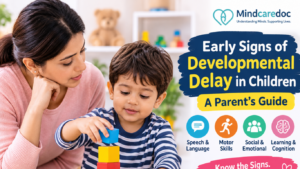
Every child is unique, and every child deserves to be understood, accepted, and supported.
Introduction
Autism Spectrum Disorder (ASD) is a neurodevelopmental condition that affects how children communicate, interact with others, learn, and experience the world around them. Every child with Autism Spectrum Disorder has different abilities, interests, strengths, and support needs. Some children may communicate verbally, while others may use gestures, pictures, or alternative communication methods. Understanding these differences is the first step towards creating a more inclusive and supportive environment for children.
At MindCare, we believe that understanding Autism Spectrum Disorder is essential for parents, teachers, caregivers, and society. With awareness, early identification, and appropriate support, children can develop their abilities and participate more confidently in everyday life.
What Is Autism Spectrum Disorder?
Autism Spectrum Disorder is a developmental condition associated with differences in brain development. It primarily affects social communication, social interaction, behaviour, and sensory processing. The word “spectrum” highlights that Autism Spectrum Disorder presents differently in every individual.
Some children may have difficulty communicating their needs, understanding social situations, or adapting to changes in their daily routines. Others may have strong interests, excellent memory, attention to detail, or unique problem solving abilities. Every child with Autism Spectrum Disorder has an individual developmental journey and deserves personalised support.
Early Signs of Autism Spectrum Disorder in Children
Recognising the early signs of Autism Spectrum Disorder can help parents seek professional guidance at the right time. Although signs vary from child to child, some common characteristics include:
- Limited or inconsistent eye contact.
- Delayed speech or language development.
- Not consistently responding when their name is called.
- Difficulty communicating wants and needs.
- Limited interest in interactive or pretend play.
- Repetitive movements such as hand-flapping or rocking.
- Strong attachment to specific routines.
- Unusual sensitivity to sounds, lights, textures, or certain smells.
- Difficulty understanding social cues and facial expressions.
Not every child who displays one or more of these behaviours has Autism Spectrum Disorder. However, persistent developmental concerns should be discussed with a qualified healthcare professional.
What Causes Autism Spectrum Disorder?
The exact causes of Autism Spectrum Disorder are not fully understood. Research suggests that genetic factors and certain environmental influences may contribute to differences in brain development.
It is important for parents to understand that Autism Spectrum Disorder is not caused by poor parenting, a lack of affection, or childhood vaccination. Parents should avoid misinformation and rely on scientifically supported information when learning about autism.
Why Is Early Identification Important?
Early identification of Autism Spectrum Disorder allows children and families to access appropriate developmental support and intervention services.
When developmental differences are recognised early, professionals can understand a child’s individual needs and recommend suitable support. Early intervention may help improve communication, social interaction, adaptive skills, learning, and everyday functioning.
Parents should consult a paediatrician or developmental specialist if they notice delays in speech, communication, social interaction, or other developmental milestones. Seeking an assessment does not mean labelling a child; it means understanding how best to support their development.
How Can Parents Support a Child with Autism Spectrum Disorder?
Parents play an important role in supporting children with Autism Spectrum Disorder. A patient, understanding, and encouraging home environment can help children feel secure and confident.
Here are some practical ways parents can support their children:
1. Understand Your Child’s Needs
Every child with Autism Spectrum Disorder is different. Observe your child’s interests, communication style, strengths, and challenges to understand what support works best.
2. Encourage Communication
Support your child’s communication through words, gestures, pictures, visual aids, or other communication methods recommended by professionals.
3. Establish a Consistent Routine
Children with Autism Spectrum Disorder may feel more comfortable when they know what to expect. Visual schedules and predictable daily routines can help reduce uncertainty.
4. Encourage Play and Social Interaction
Provide opportunities for enjoyable activities, structured play, and positive social experiences without forcing interactions.
5. Be Patient and Positive
Celebrate small achievements and encourage your child’s progress. Avoid comparing your child’s development with that of other children.
6. Work with Professionals
Collaborate with qualified professionals to develop an individualised support plan based on your child’s developmental needs.
Professional Support and Intervention for Autism Spectrum Disorder
Children with Autism Spectrum Disorder may benefit from different forms of developmental and educational support depending on their individual needs.
Some commonly recommended support approaches include:
- Speech and language therapy: Supports communication, language development, and functional communication skills.
- Occupational therapy: May help with daily living activities, sensory needs, motor skills, and independence.
- Behavioural and developmental interventions: Can support communication, learning, adaptive skills, and positive behaviour.
- Special education: Provides individualised learning strategies suited to a child’s abilities and educational needs.
- Parent guidance and counselling: Helps families understand Autism Spectrum Disorder and develop practical strategies to support their children.
Intervention plans should be personalised, evidence-informed, respectful of the child’s preferences, and regularly reviewed by qualified professionals.
Creating an Inclusive Environment for Children with Autism
Children with Autism Spectrum Disorder deserve equal opportunities to learn, play, communicate, and build relationships.
Schools, families, and communities can make a positive difference by creating inclusive environments. Teachers can use visual instructions, structured classroom activities, flexible learning approaches, and sensory-friendly spaces to support children with different developmental needs.
Acceptance is just as important as awareness. Instead of expecting every child to behave or communicate in the same way, society should recognise and respect individual differences.
How MindCare Supports Child Development and Mental Well-being
At MindCare, we believe that every child’s development deserves attention, understanding, and encouragement. Autism Spectrum Disorder is not a reason to overlook a child’s abilities, interests, or potential.
Our focus is on promoting awareness of child development, helping parents understand developmental differences, and encouraging early professional guidance when concerns arise.
We believe that every child deserves an opportunity to grow in a supportive environment where their individuality is respected and their achievements are celebrated.
Conclusion: Every Child Has a Unique World
Autism Spectrum Disorder reminds us that children experience and understand the world in different ways. Some children may communicate differently, prefer specific routines, or experience sensory information more intensely. These differences should be understood with patience, compassion, and respect.
With early identification, appropriate interventions, family involvement, and inclusive education, children with Autism Spectrum Disorder can develop their abilities and work towards greater independence and well-being.
At MindCare, we encourage parents and caregivers to replace judgement with understanding, fear with awareness, and comparison with acceptance.
MindCare – Every Child Matters. Every Mind Is Unique. Every Future Deserves Care.
Frequently Asked Questions (FAQs)
1. What is Autism Spectrum Disorder in children?
Autism Spectrum Disorder is a neurodevelopmental condition that affects communication, social interaction, behaviour, and sensory experiences. Every child experiences Autism Spectrum Disorder differently.
2. What are the early signs of Autism Spectrum Disorder?
Common signs include delayed speech, limited eye contact, difficulty with social interaction, repetitive behaviours, and unusual sensory responses. Signs vary between children.
3. At what age can Autism Spectrum Disorder be identified?
Autism Spectrum Disorder can sometimes be identified by 18 months or earlier. A reliable diagnosis may be possible around age two when conducted by an experienced professional.
4. Can Autism Spectrum Disorder be cured?
There is currently no established cure for Autism Spectrum Disorder. However, appropriate interventions, developmental support, and educational services can help children build skills and improve their quality of life.
5. Can children with Autism Spectrum Disorder attend regular schools?
Yes. Many children with Autism Spectrum Disorder can attend mainstream schools with suitable accommodations, individualised educational support, and an inclusive learning environment.
6. Why is early intervention important for Autism Spectrum Disorder?
Early intervention can help children develop communication, social, learning, and everyday living skills while supporting their individual developmental needs.
7. How can parents support a child with Autism Spectrum Disorder?
Parents can support their children through patience, consistent routines, positive communication, play-based learning, professional guidance, and emotional encouragement